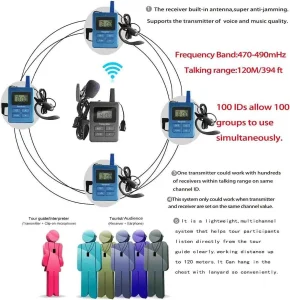
Why a UHF Wireless Audio Guide System

Why a UHF Wireless Audio Guide System Outperforms All Alternatives (And What to Look For)

When choosing a wireless audio solution for guided tours, not all systems are created equal. While many vendors promote Bluetooth or 2.4GHz devices, professionals in museums, factories, and heritage sites overwhelmingly choose UHF wireless audio guide systems—and for good reason.
UHF (Ultra High Frequency) technology operates in license-free bands (e.g., 863–865 MHz in Europe, 902–928 MHz in the US), offering superior signal penetration through walls, metal structures, and crowds. Unlike Wi-Fi-prone 2.4GHz systems, UHF avoids interference from smartphones, routers, and other electronics—ensuring stable audio up to 200 meters, even indoors.
But performance isn’t the only advantage:
100+ independent channels allow dozens of tour groups to operate simultaneously without crosstalk—critical for venues like the Colosseum or BMW plants.
Low latency & high audio fidelity preserve speech clarity, essential for elderly visitors or non-native speakers.
CE, FCC, and RoHS certifications guarantee legal, safe operation across global markets.
Rechargeable lithium batteries (8–12 hrs) and rugged ABS housing support daily commercial use.
Avoid “cheap” knockoffs that skip frequency stability testing. True professional UHF systems undergo rigorous RF calibration and come with multi-year warranties.
Trusted by UNESCO sites, government agencies, and Fortune 500 visitor centers, a certified UHF wireless audio guide system isn’t just an expense—it’s an investment in reliability, professionalism, and visitor satisfaction.
👉 Ready to deploy a future-proof tour solution? Get a free technical consultation and sample kit—shipped worldwide in 48 hours.
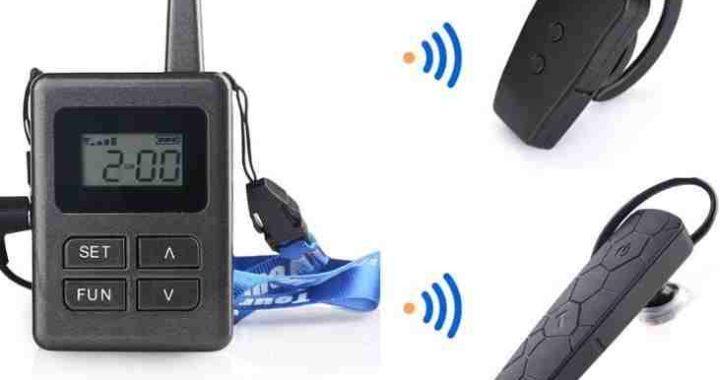
Audio Tour Guide System Buyer’s Guide

Audio Tour Guide System Buyer’s Guide (2025): How to Choose the Right Wireless Solution for Museums, Factories & Heritage Sites

An audio tour guide system is no longer a luxury — it’s a necessity.

Whether you’re guiding VIPs through a semiconductor factory, leading school groups in a national museum, or hosting pilgrims at a sacred site, clear, reliable audio is the foundation of a great experience.

Yet many venues still rely on outdated or consumer-grade systems that fail when it matters most:

  • Audio cuts out near machinery
  • Guests can’t hear over crowd noise
  • Multiple tour groups interfere with each other
  • Systems aren’t ADA or CE compliant

So how do you choose a professional audio tour guide system that delivers clarity, coverage, and compliance — without breaking the budget?

This 2025 guide breaks down everything you need to know.


🔍 What Is an Audio Tour Guide System?

An audio tour guide system is a wireless communication setup that allows a guide (transmitter) to speak clearly while multiple listeners (receivers) hear the message in real time through earpieces or headphones.

There are three main technologies used today:

Technology Best For Key Limitations
Infrared (IR) Secure indoor briefings ❌ Only works indoors
❌ Short range (<30m)
❌ Useless in sunlight
2.4GHz RF Small indoor tours ❌ Suffers Wi-Fi/Bluetooth interference
❌ Max 100m range
❌ Limited channels (≤15)
UHF Digital Museums, factories, outdoor sites ✅ 200m+ stable range
✅ 100+ channels
✅ No Wi-Fi interference

💡 Pro Insight: Over 70% of new professional deployments in 2024–2025 use UHF digital systems — especially for industrial or large-scale cultural venues.


🏛️ Top Use Cases & System Requirements

1. Museums & Art Galleries

  • Need: Quiet operation, discreet earpieces, ADA compliance
  • Recommended: UHF system with assistive listening mode (meets US ADA / EU EN 301 549)
  • Example: FG03 ear-hook receiver — lightweight (18g), invisible from front

2. Smart Factories & Industrial Plants

  • Need: Noise immunity, long range, durability
  • Recommended: UHF with metal-penetration capability (863–865MHz band)
  • Real result: Automotive plants report 40% fewer missed instructions after switching to UHF

3. Outdoor Heritage & Religious Sites

  • Need: Works in open air, rain-resistant, long battery
  • Avoid: IR (fails outdoors) and 2.4GHz (unstable in wide areas)
  • Ideal: UHF system with 8-hour battery + rugged carry case

4. Multilingual Conferences

  • Need: Support for simultaneous interpretation (6+ languages)
  • Must-have: ≥50 channels to avoid crosstalk between language groups